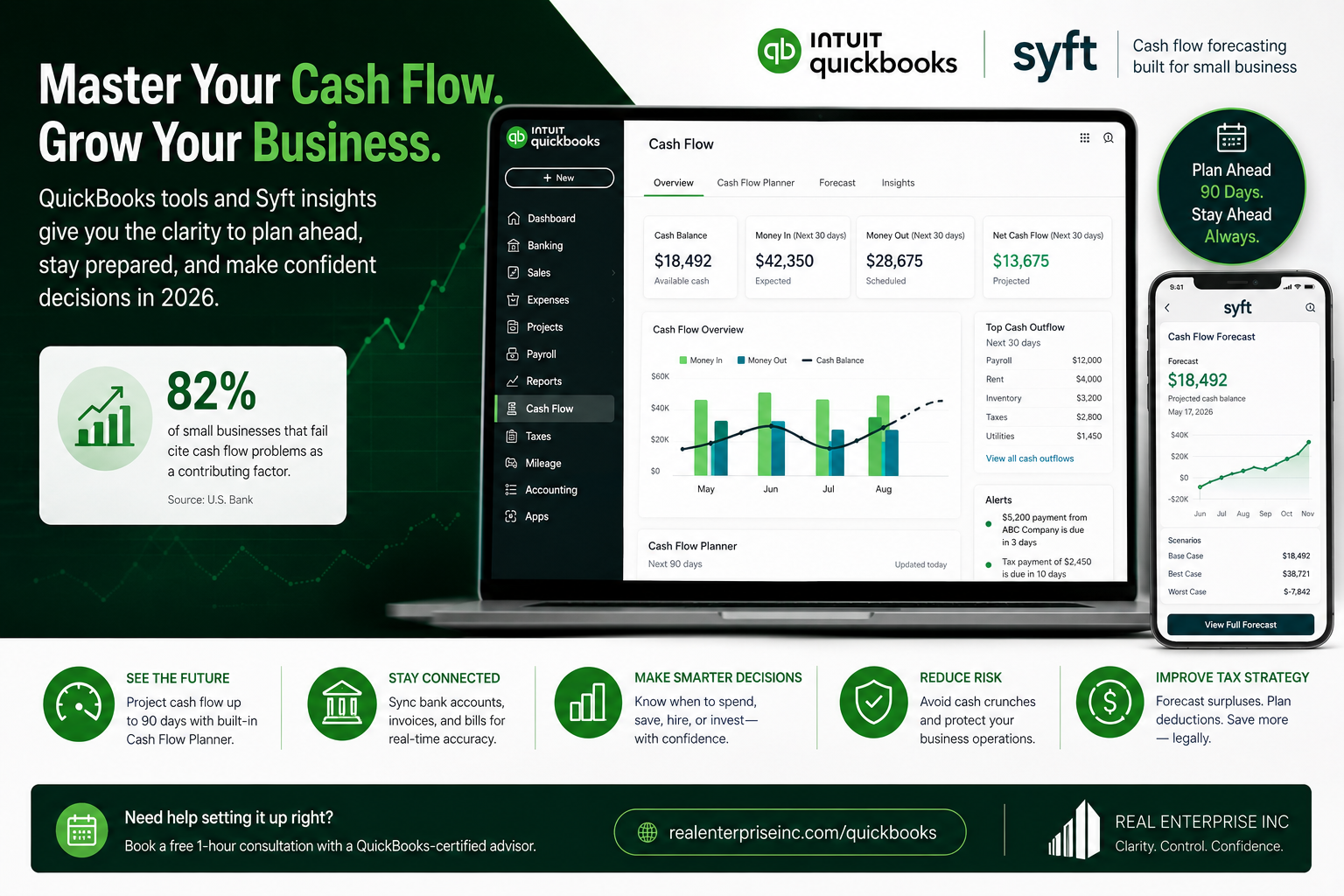
Nearly 82% of small businesses that fail cite cash flow problems as a contributing factor — not lack of revenue, not bad products, but the inability to see when money runs out before it actually does. A contractor might have $40,000 in outstanding invoices and still miss payroll next Friday. That gap between what you're owed and what's in your account is exactly where businesses quietly collapse. The good news: QuickBooks Online has tools built specifically to close that gap.
Most small business owners treat cash flow like a rearview mirror — they look at what already happened. They check their bank balance, see a comfortable number, and spend accordingly. What they miss is the timing problem: bills due on the 1st, client payments arriving on the 15th, and a tax deposit due on the 10th. QuickBooks tracks cash flow automatically through its built-in reports, but very few owners ever open the Statement of Cash Flows or configure the Cash Flow Planner — which means they're making decisions with incomplete data.
QuickBooks Online includes a Cash Flow Planner that uses your actual bookkeeping data to project your cash position up to 90 days out. You'll find it under the Cash Flow menu in your dashboard. It pulls in scheduled invoices, recurring bills, and bank data to show you a forward-looking picture — not just what happened last month. If you connect your bank accounts and keep your invoices current in QuickBooks, this tool updates automatically so you're never working from stale numbers. Run it weekly, not monthly, especially if your revenue is seasonal or project-based.
If 90 days isn't enough runway for your planning needs, third-party tools like Float or Fathom integrate directly with QuickBooks Online and extend forecasting out to 36 or even 60 months. These are worth considering if you're planning a major equipment purchase, a hire, or a business loan application. Lenders increasingly want to see forward-looking cash flow projections — not just last year's P&L. Having a clean QuickBooks file connected to a forecasting tool gives you something concrete to walk into that conversation with.
Accurate cash flow forecasting doesn't just protect your operations — it directly shapes your tax strategy. When you can see a cash surplus coming in Q4, you have time to make a retirement contribution, prepay a deductible business expense, or accelerate a capital purchase before December 31st. Those decisions can legally reduce your taxable income by thousands of dollars. But they only work if you see the cash coming far enough in advance to act — which is exactly what a well-configured QuickBooks setup makes possible.
If you want to get your Cash Flow Planner set up correctly, clean up your chart of accounts, and build a forecasting workflow that actually fits your business, a one-hour consultation can save you months of guesswork. You can book a free session with a QuickBooks-certified advisor at [https://www.realenterpriseinc.com/quickbooks](https://www.realenterpriseinc.com/quickbooks). No sales pitch — just a real look at your numbers and a clear plan for what to do with them.