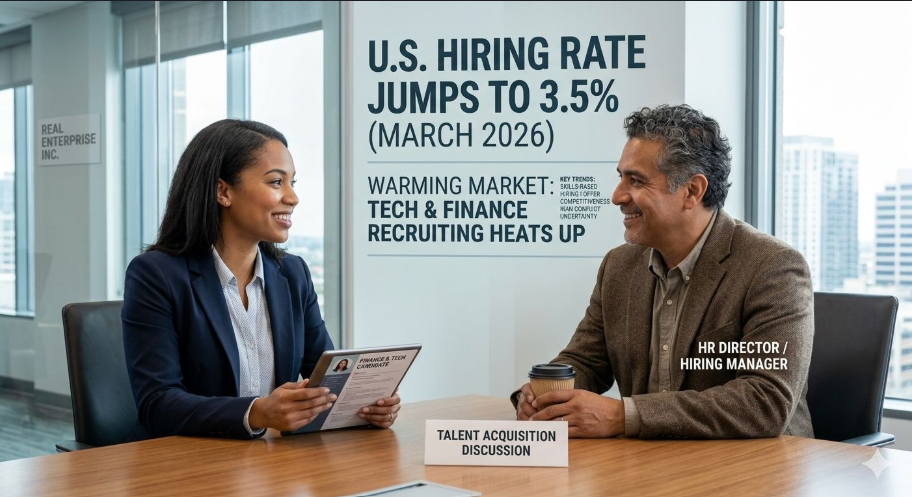
The U.S. hiring rate climbed to 3.5% in March 2026, the fastest pace in two years, up from 3.1% in February. That's a meaningful signal that the "low hire, low fire" freeze gripping the job market for over a year may finally be breaking. Economists are cautiously optimistic, though they note the ongoing conflict in Iran introduces real economic uncertainty that could slow progress. One month doesn't make a trend, but the directional shift is hard to ignore.
For companies hiring in tech and finance, a warming market means the candidate pool won't stay passive for long. Professionals who sat tight during the freeze are starting to move again. Quit rates, which were suppressed, tend to rise as hiring picks up — meaning retention pressure returns alongside recruiting pressure. If your pipeline for engineers or financial analysts is thin right now, it will only get more competitive as the market opens up.
Top organizations are responding by rethinking how they source talent entirely. SHRM research from 2026 shows HR leaders are shifting from "buy-only" strategies toward internal development pipelines and non-traditional talent sources. Skills-based hiring — evaluating candidates on demonstrated ability rather than credentials — is gaining traction, particularly in technology roles tied to AI and cybersecurity. Companies that build these systems now will have a structural advantage when the competition for talent intensifies.
If you're an HR director or hiring manager, the window to act is open but narrow. Audit your current requisitions and identify the two or three roles where a delay of 60 to 90 days will genuinely hurt the business. Move those to the front. Simultaneously, review your offer competitiveness — salary benchmarks shift quickly when hiring volume rises. Flexible work arrangements remain a lever, especially for senior-level tech and finance candidates where data shows access to flexibility correlates with experience level.
Watch the macroeconomic signals closely over the next 60 days. The Iran conflict is the primary wildcard — any significant escalation could trigger another employer pause, similar to what stalled hiring in early 2025. AI adoption in recruiting is accelerating regardless of market conditions, but McLean & Company found that only 7% of HR teams have a formal AI strategy despite 59% already using AI tools. That gap will matter more as the market heats up and speed-to-hire becomes a differentiator again.
Sources
- Data suggests 'hiring recession' may be behind us — but the Iran war poses job market risks
- Rethinking Talent: Why HR Must Build, Not Just Buy
- Hiring Trends in the US Job Market (2026 Update)
- Outdated Methods Are Undermining Hiring Decisions, Says McLean & Company
- Remote work statistics and trends for 2026
- 2026 Forecast: Where the Jobs Will Be