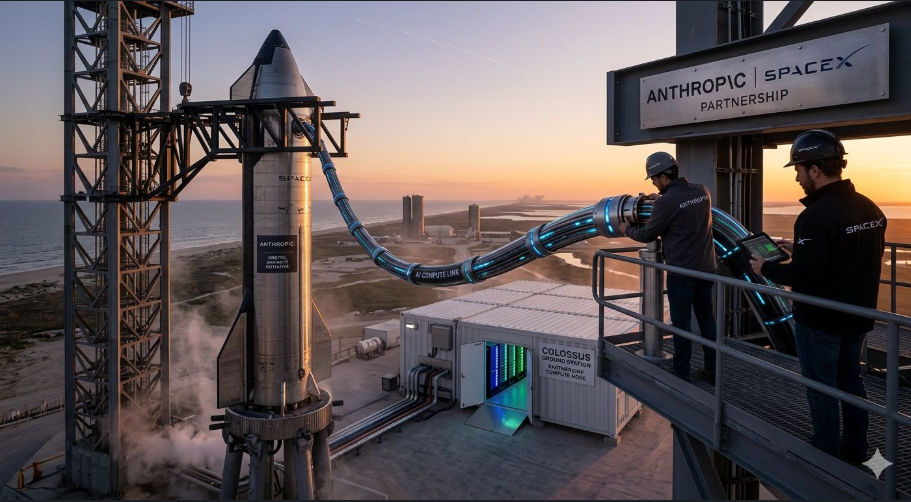
In a move that reshapes the AI compute landscape, Anthropic secured access to SpaceX's Colossus 1 data center — 220,000 NVIDIA H100 GPUs and over 300 megawatts of power capacity in a single facility in Memphis, Tennessee. For context, that's more raw compute than most countries have deployed for AI research in total. This isn't a partnership announcement. It's a signal about where the frontier model race is going and what it costs to stay in it.
The Colossus facility was built at a speed that stunned the industry — xAI went from groundbreaking to fully operational in under a year. Anthropic's access to this capacity means Claude's next generation of models can be trained at a scale that wasn't possible under prior compute arrangements. For businesses using Claude today, this translates to better reasoning, lower latency, and expanded context windows in future releases. The practical implication: the cost-performance curve of enterprise AI keeps improving, and the gap between frontier models and everything else is widening.
What this means for your business is a narrowing window to get your AI infrastructure decisions right. The companies that build now — workflows, data pipelines, agent architectures — are locking in institutional knowledge about what works. Companies waiting for the "right moment" are watching their competitors build muscle memory. The right infrastructure layer for most SMBs isn't 220,000 GPUs. It's a well-designed agentic workflow running on frontier models that keeps improving without you having to do anything. If you want to map that out for your specific business, book a strategy call at realenterpriseinc.com.